The Legacy

legacy

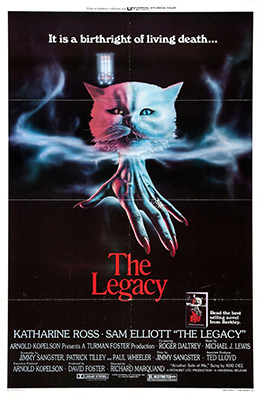
The Legacy (1978)

Margaret Walsh (Katharine Ross) and her boyfriend Pete (Sam Elliott) run an interior design firm in San Francisco. They are invited to come to England to work on a project. Everything is very hush hush but the money is too good to refuse so they agree to the project. In jolly old England, they meet Jason Mountolive (John Standing) who invites them to stay at his mansion after they have a little motorcycle accident. Turns out he is this really ancient duder with some black magic powers and a coven of six people that Margaret is the newest member of. Suddenly, everyone starts dying in mysterious ways and yeah, that’s the plot.

This horror/romance(?) movie has the lavish sets but not the gothic feel. The tone is further hampered by its romance novel whimsy. Sam Elliott is great and all and a gratuitous butt shot never hurt any actor’s career, right? But he just seems completely out of place in every scene. I can’t say I’m all about the Katharine Ross (The Stepford Wives) either. The rest of the cast is pretty stellar with lots of familiar faces from British cinema. Charles Gray from The Rocky Horror Picture Show shows up, looks very suspicious, and speaks in that insanely cool voice of his before dying spectacularly. Roger Daltrey makes the most of his death scene by taking it to comic proportions.

The Legacy has been avoiding me and now I see why. However, 1970s horror is alive and well in this one as the ancient evil gets hip to the ‘Me Generation’. There are some great moments and a couple of cool death scenes but much of this film is pretty bland and impossible to take seriously (which is normally a good thing). British director Richard Marquand would go on to bigger and better things but it’s hard to believe this looked all that good on his resume.

In the hands of a Spanish or Italian director with less than half the budget, we could have had something really special here. My biggest complaint is that the few chilling moments show that with a little more care, The Legacy could have been something really special. The ending is definitely interesting and makes evil seem like it could be pretty fun if you just keep on smiling. And good luck getting past the wretched opening song. It’s a big old 70s sub-AM turd called “Another Side of Me” by Kiki Dee.
 

Kibakichi 2

kibakichi2

Kibakichi 2 (2004)

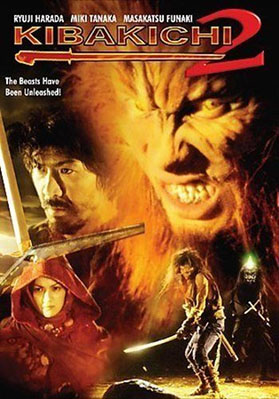
Sakuramaru (Masakatsu Funaki), a renegade samurai, is cutting his way through the countryside and anyone who stands in his way. He is more than happy to cross paths with Kibakichi (Ryuuji Harada) because he has finally found a worthy opponent. Anju (Miki Tanka), another werewolf samurai, interrupts their battle by trying to kill Kibakichi herself in order to get revenge for her monster family. Kibakichi is injured and is cared for by a young blind woman named Tokoko (Aimi Nakajima) in a nearby village. A new threat emerges when three monsters decide to take over and all concerned parties are dragged into yet another Yokai war.

Kibakichi 2 opens promisingly enough with Sakuramaru cutting down an entire city with his sword but before long, the film slows to a crawl. There is plenty of swordplay and some monster action (needs more please) but the spark is definitely gone this time around. A melodramatic departure is always welcome (that’s just me) but not one as flat as the one here. The pacing of this film is terrible making the 80 minute running time feel like several hours. There are too many cheap shortcuts in the effects department that really stand out. There are fewer monsters in Kibakichi 2 than in the first film so the rubbery masks stick out even worse. Samurais attack with mouths full of fake blood, are cut down, and then spray their bloody spittle into the air.

The returning cast (Ryuuji Harada and Miki Tanaka) seems bored with the material but some of the new faces are up for the task. Masakatsu Funaki (Godzilla: Final Wars) is great as the Sakuramaru, the bloodthirsty berserker swordsman. Aimi Nakajima is also good as the sweet (and very cute) Tokoko who gets caught up in all the intrigue. As for Ryuuji Harada (Izo, Pyrokinesis), he takes the already stoic character of Kibakichi and makes him into a sleepwalker through much of the film. Miki Tanaka plays Anju as though she was constipated and just can’t seem to get into the battle scenes.

Kibakichi 2 is a big disappointment after the unbridled insanity of the first film. Not to say that Kibakichi 2 is your average flick. Oh no. Anyone who watches the samurai werewolf ballet sequence at the film’s climax won’t believe for a second that there is anyone even remotely normal behind the camera. Speaking of the samurai werewolf ballet, this is one of the weirdest and most endearingly pathetic filmic disasters I’ve ever seen. While witnessing this spectacle I felt was teetering on edge of madness. In fact, this scene is probably the only reason to sit through this movie. I just don’t know anymore.

I hate to compare a sequel to its predecessor this blatantly but while looking for, at best, a good companion piece or, at worst, an entertaining diversion, I found neither. Kibakichi 2 is brought down by its molasses pacing, sleepy cast, and restraint of the craziness that made the first film so much fun. Who knows what happened between the two films but my only hope now is that there won’t be a third.

Kibakichi

kibakichi

Kibakichi (2004)

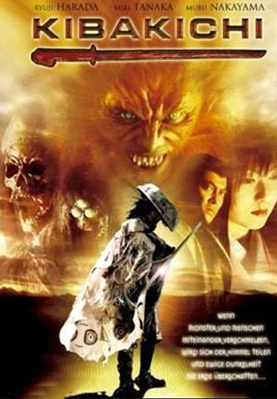
Ryuji Harada plays Kibakichi, a swordsman and werewolf who is constantly under attack by bounty hunters while traveling through the countryside to escape his past. Kibakichi discovers a village of Yokai, monsters like himself that have assumed the personas of human beings in order to survive. The Yokai are working on a deal with the yakuza to give them a place to lead their lives as they want to. Kibakichi warns the Yokai not to trust humans and just as he is about to leave, the yakuza, led by Yomaji (Mubu Nakayama), betray the Yokai and launch a violent assault on their village. Caught in the crossfire, Kubakichi uses his superior sword-fighting skills and his powers as a Yokai to defend his kind.

Director Tomoo Haraguchi brings this wild and explosive horror fantasy film to life. Kibakichi superbly combines traditional Japanese monsters with action movie bravado resulting in a jaw dropping experience. The choreography in the sword fighting scenes and the stunt work in the film’s finale are excellent.

The special effects are simplistic but ambitious. The Yokai, taken straight from Japanese lore, look great and there is plenty of blood and gore (both red and blue) spilled throughout. Various filters are used to dowse the film in gorgeous earth tones, giving Kibakichi its own unique and proto-classic look.

The streamlined plot revels in its traditional “lone swordsman” storyline but removes all traces of subtlety to keep in step with the director’s crowd-pleasing style. The action just keeps on coming rarely slowing to allow any audience to lose interest. Even the film’s message is trite: human beings ruin everything.

The actors in Kibakichi perform with a very representational acting style making the film feel like a bizarre theatrical production. This style complements the film’s script, which is laden with melodrama and moments meant to tug on the viewer’s heartstrings. Ryuji Harada is perfect as the stone-faced and deadly Kibakichi.

Kibakichi is one hell of an ambitious and truly weird film. It breaks all the rules of its multiple genres (just check out the yakuza’s arsenal) and yet still captures the conventions that make samurai films so memorable. Most viewers will find it difficult not to be blown away by the sheer bombastic audacity of the film’s climax. Followed by a crappy sequel.

The Last Supper

lastsupper

The Last Supper (2005)

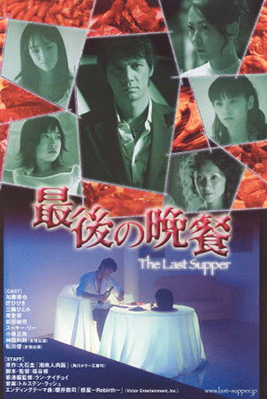
Dr. Yuji Kotorida (Masaya Kato) is a ‘Godsend’ of plastic surgery. He is well-respected by both the medical community and the media but what no one knows is that he is a vicious and cannibalistic serial killer. In an anonymous blog, Dr. Kotorida describes the act of eating human flesh as the equivalent of making love. When his horrible secret is discovered by an insane detective (Hiroki Matsukata), Kotorida devises a plan to make himself famous as well as to escape from the police.

Finally, cannibalism is sexy again! Directed by Osamu Fukutani (The Suicide Manual), The Last Supper sports a menacing soundtrack and a somber (and sometimes chilling) mood. This shot-on-video cannibal horror flick may look cheap but it got my stomach churning (not an easy thing to do). The plot doesn’t get too bogged down in ‘realism’ like some of the CAT III Hong Kong gross-out flicks (Human Pork Chop, in particular).

The cast of The Last Supper may be somewhat stiff but all in all manage to turn in some decent performances. Horror actress Hitomi Miwa (Ju-On, Embalming) is excellent and I really liked newcomer Hibiki Takumi. Chinese actress Zuki Lee is quite good as Dr. Kotorida’s Hong Kong fling (and meal). Of course, it’s Masaya Kato’s show and he definitely goes the distance in one hell of a sick role. The award for the strangest performance in the film goes to Hiroki Matsukata (The Yakuza Papers). His detective character is one sick (very, very sick) bastard.

The only thing that keeps this movie from being a splatter cannibal classic is its low production values. Cheap sets and digital photography are perfectly acceptable for this trash film lover but when you skimp on the gore effects, now that’s an entirely different story. The severed heads suffer the most and are clearly mannequin heads with wigs tacked on. Also, the film’s fleshy finale isn’t exactly impressive but hey, the effort is there.

So my theories about cannibal nightclubs in Hong Kong have proven to be true. The idea that devouring a person’s flesh is a sexual act really sleazes up this one. Some of the flesh-eating is pretty dang gross (wait, when isn’t it?) and there’s a whole lot of blood and bargain-priced gore. The Last Supper is somewhat disappointing but a few nauseous and shocking surprises make it a worthy entry in the cannibal movie canon.

Matango

matango

Matango (1963)

On a sailing excursion, a mixed group of disenchanted socialites and working class sailors get caught in a storm. With their communication and navigation equipment destroyed, the group drift for days until they come upon a seemingly uninhabited island. While searching for food on the island, they discover an abandoned ship run ashore on the other side of the island.

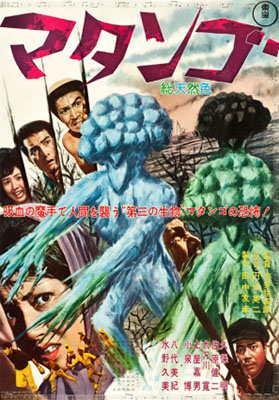
Inside the moldy vessel loaded with radiation research equipment, a captain’s log records the crew losing their sanity over the lack of food. The log also warns against eating the matango mushrooms that grow on the island because they cause insanity. While the group struggles to find food and repair the sailboat to escape the island (especially after some ghostly apparitions appear one night), some become too hungry and consume the mushrooms despite the warnings. Before long, symptoms far worse than insanity begin to plague the matango eaters and the remaining crew must fend themselves against unimaginable horrors.

This has got to be the strangest motion picture from Toho Films in the 1960s (aside from Frankenstein Conquers the World). Ishiro Honda, director of the original Godzilla and many other Kaiju (giant monster) films, brings the wild and weird Matango (AKA Attack of the Mushroom People AKA Fungus of Terror) to life. With sumptuous cinematography and a genuinely tense and creepy atmosphere, this is definitely not your average mushroom-horror film.

Another lavish part of the film are the sets and the locations. The magnificent tropical island blends seamlessly with the dank jungle where the matango thrive. The abandoned ship which the castaways use as their home on the mysterious island is very detailed and creates many opportunities for spooky moments, none of which are missed. The costuming and the makeup on the mushroom creatures as well as the humans in the process of turning into giant mushrooms are both top notch.

The cast is awesome and expertly conveys the growing tension aboard the claustrophobic quarters they find themselves as well as their terror as they begin to realize something is terribly wrong on the island. It’s hard to imagine a cast looking at the script for Matango and not jumping ship (literally). From the gratuitous musical number(s), overtones of sexual repression, hallucinogenic mushroom use, and seven and half foot laughing phallic symbols, these folks had their work cut out for them.

Matango is custom made for fans of creepy horror films or just plain freaky Japanese cinema. With themes of urban decay and the loss of innocence poured into its already intoxicating concoction, this film is impossible to ignore and will no doubt be showing up time and again on the shelves of J-horror and Toho buffs. I implore you. Please, do not eat the mushrooms.


Massacre Time

massacretime

Massacre Time (1966)

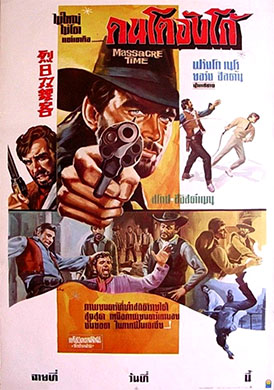
Prospector Tom Corbett (Franco Nero) returns home to find that his land has been taken over by the Scott family. Tom finds his brother, Jeff (George Hilton), a drunken mess who doesn’t seem to have a care in the world. Together (although Jeff is quite reluctant) they team up to take back what is rightfully theirs. Even more revenge-fodder is piled on after Tom is nearly whipped to death by Junior Scott and Jeff’s mother gets killed in a gallop-by shooting. A scandalous secret is revealed and now the brothers have even more to fight for and they won’t rest until every one of the Scott family’s stooges are six feet under.

Like nearly all of his contemporary Italian directors, Lucio Fulci (The Beyond) spent some time in the spaghetti western genre. While not on par with classics such as Django or For a Few Dollars More, Massacre Time is an excellent Sunday afternoon gunslinger flick. Camerawork by Riccardo Pallottini (The Killer Must Kill Again) is tight and captures all of the action excellently. The soundtrack by composer Coriolano Gori (Four Times that Night) is acceptable and I dig that theme song (“A thousand miles you’re all alone! ALL ALONE!”).

Franco Nero (Street Law) and George Hilton (My Dear Killer) make an excellent pair despite Hilton’s scene-stealing (he puts a cigar out in a duder’s face and tries to get a chicken drunk!). Another excellent performance comes from Giuseppe Addobbati (Strip Nude for Your Killer) whose portrayal of Junior Scott is psychotic and practically orgasmic when it comes to committing acts of violence. Be sure to look for the menacing Romano Puppo (Fulci’s Contraband) in a small role as one of Scott’s henchman. And Aysanoa Runachagua is too freakin’ cool as Sonko, the silent gunman.

While Massacre Time may not be an all out classic, it is still entertaining as hell with only a blatantly sped-up fight sequence and a generic plot holding it back. The shootouts are well-staged, the bad guys are especially cruel, and there are even some moments of comic relief thrown in for good measure. It’s quite interesting to see this side of Fulci whose gore-filled horror films dominate the largest part of his legacy.


Red Riding Hood

redridinghood

Red Riding Hood (2003)

After the death of her politician father and subsequent abandonment by her mother, 12 year old Jenny (Susanna Satta) feels that it is imperative that the guilty are punished because God forgets their sins (no matter how miniscule) too easily. With the help of her mysterious friend, George, Jenny begins terrorizing Rome by punishing sinners with deadly justice. All is going well for Jenny until her grandmother, Rose (Kathleen Archebald), comes to take Jenny back to New York with her. Jenny imprisons Rose in her apartment so that she won’t interfere with her plans to confess her love for her tutor, Tom (Roberto Purvis). When Tom starts to suspect that something is terribly wrong with Jenny, he tries to stop her and George’s killing spree before he himself becomes a victim.

For a first time director, I have to compliment Giacomo Cimini. Although flawed, Red Riding Hood is a fine first feature and shows great promise. Some of the credit goes to one of the films co-cinematographers, Sergio Salvati (Fulci’s The Beyond and The Black Cat), who manages to add some of the old school Italian horror flair to the filming. The script and the plot are well done and become especially tense in the final act.

The role of Jenny is a difficult one and is handled fairly well by the young Susanna Satta. Unfortunately, many of her lines are delivered too mechanically. But to Satta’s credit, she portrays an evil little girl perfectly and has great control over her expressions and the physical aspects of her screen presence. This was a tough first film role for her and I’m interested to see what she’ll do next.

Kathleen Archebald is very good as Rose who suffers a great deal of torment from her twisted granddaughter. The actor I’m least impressed with is Roberto Purvis. The character of Tom isn’t developed well in the script and isn’t given much depth by Purvis until his last few moments of screen time.

The music of the film is creative but distracting. It is some merry sounding business with lyrics that seem to refer to the plot but overall just doesn’t work in the film. The incidental music is fine but this jaunty theme keeps coming back. Some upbeat music would have been perfect for many of the strange scenes in the movie but the filmmakers have made a poor choice here.

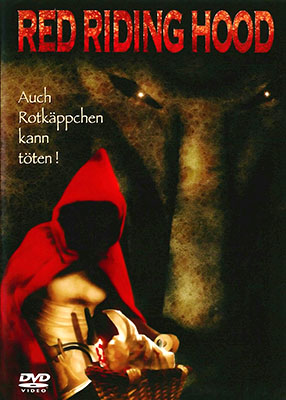
Jenny’s companion through much of the film is George, a mysterious figure in a black jumpsuit, red galoshes, black cloak, and a white wolfish mask. George looks pretty silly and just isn’t creepy at all. My last complaint is about the film’s pacing. It slows down a little in the middle but not for too long. Just long enough for a viewer to wonder when the film is coming to an end.

Okay, enough griping, why is this film worth seeing? For one thing, the murders are very cool and bloody. The effects aren’t over the top or disgusting but a couple of them are inventive and memorable. The movie has some very twisted humor in it that will appeal to horror fans. And finally, this film is just plain nuts. I don’t think I’ve seen a movie this odd in a while.

Red Riding Hood is a likeable flick with some very strange elements thrown in to keep it from being just another slasher. The setting of Rome and the Italian crew give this film just a hint of Giallo, which is always pleasant. Despite a couple of flaws (some wooden delivery from a couple of the actors and George’s costume), I had a great time watching this. Prepare to be weirded out and enjoy the show.

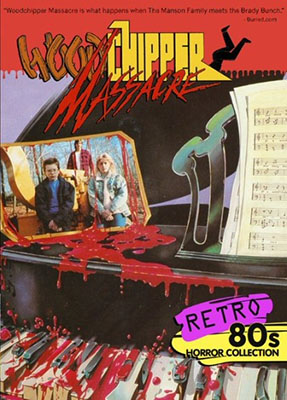
Wood Chipper Massacre

woodchippermassacre

Wood Chipper Massacre (1989)

When dad goes on a business trip, he leaves Aunt Tess (Patricia McBride) in charge of his three kids for the weekend. John (Jon McBride), the oldest, is doing some yard work and is using the woodchipper (heh heh heh) to take care of some dead branches. Denise (Denice Edeal), the middle kid, is more concerned with her crush on a boy than anything else. And Tom (Tom Casiello), the youngest, is eagerly awaiting his mail order survival knife.

Much to the three kids’ dismay, Aunt Tess turns out to be a total battleaxe. She tries to get the kids into shape by attacking how their father has raised them since their mother died. John and his siblings put up with her as best they can until Tom accidentally stabs Aunt Tess to death. The three decide to dispose of her body with the woodchipper. Everything is about to return back to normal when Aunt Tess’s deadbeat son, Kim (Kim Bailey) turns up looking for money to pay off his gambling debts.

I think every kid has accidentally stabbed an unpleasant relative to death and then shoved the body into a conveniently-placed woodchipper at least once in their lives. It’s a common “coming of age” moment that everyone can relate to. Well, maybe not but Woodchipper Massacre makes it all look so easy and so dang fun. Jon McBride (Cannibal Campout, Among Us) directs this very 80s shot-on-video horror film. The soundtrack is wildly silly, the gore effects are nearly nonexistent, the acting is strictly after school drama club (even the adults), and the budget is miniscule at best. However, Woodchipper Massacre has got a bizarre charm that is as hard to deny as it is to identify.

I can’t help but love the cast on this one. Denice Edeal and Tom Casiello both missed their calling on “You Can’t Do That On Television”. Edeal makes up for lack of experience on camera by shouting her lines and forcing her every facial expression to the breaking point. Awesome. Tom Casiello is the 80s Everykid (perhaps just a little more geeky) and is easily the one having the most fun on camera. Jon McBride plays eldest brother John pretty well but his mom, Patricia McBride, really steals the show. Aunt Tess is one of those unnerving characters that you just want to strangle the minute they open their mouths.

Woodchipper Massacre is quite entertaining with only a few missteps in the pacing. The film takes a little while to get going but the 80s vibe certainly saves it for me during these (thankfully) short stretches of awkwardness. While essentially free from gore and exploitation (other than the lurid title and bloody cover art), the film is actually funny and charming. The interaction of three “kids”, McBride, Edeal, and Casiello, helps add to the sitcom feel which actually makes the film an even stranger experience. I can’t get over the ballsiness of McBride and company to actually put a heartwarming and decidedly happy ending on this one.

“Call that little tramp and tell her to corrupt somebody else tonight!”


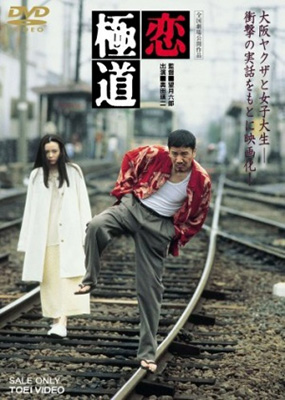
A Yakuza in Love

yakuzainlove

A Yakuza in Love (1997)

Eiji Okuda stars as the hapless yakuza, Kinichi, who falls in love with Yoko (Yuna Natsuo), the waitress. Their twisted relationship is just getting started as his boss dies and Kinichi completely screws up an attempt at assassinating rival boss, Uzaki (Shohei Hino). Soon, Kinichi and Yoko flee to Osaka where they begin dealing drugs to get by. As enemy yakuza begin to close in the pair and Kinichi becomes more dependent on drugs, their situation worsens and threatens to explode at any moment.

Rokuro Mochizuki (Onibi, Another Lonely Hitman) directs A Yakuza In Love, one of the most twisted and painful love stories ever filmed. The film is visually stunning which balances out the sexy, funny, and brutal moments that take place. The main characters, which dominate the film, are complicated and vividly realized. No one is easy to like here but they are all fascinating.

Eiji Okuda’s portrayal of Kinichi is incredible. Viewers will be hard pressed to find a yakuza more despicable or lovable than the lazy, stubborn, and sleazy Kinichi. He’s an abusive boyfriend, a junkie, and a date-rapist but for some reason he’s an enthralling (and pretty repugnant) character. Most viewers will probably be put off by Kinichi’s mistreatment of Yoko and will be mystified why she stays with him.

Yoko is brought to life by Yuna Natsuo (Wild Life) and is a very complex individual. Her inexperience in love leads her to make some serious mistakes with Kinichi but her surprising devotion to him reveals that she is a very strong person. Shohei Hino (Gozu, Mobster’s Confession) is great as boss Uzaki, a truly frightening character (even with his prosthetic ear).

A Yakuza In Love in not an easy pill to swallow. This is an emotionally draining film. It has many ups, downs, in-betweens, and it gets dark as most viewers familiar with yakuza films will see coming. The film has a realistic portrayal of drugs and the effects it has on people’s judgment; especially people that weren’t that bright to begin with. Rokuro Mochizuki is a fine director and A Yakuza In Love is a prime example of that.


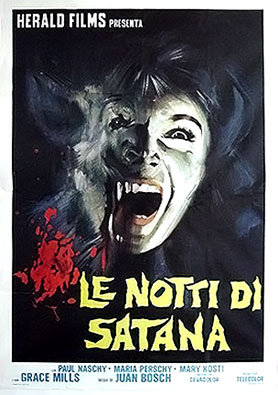
Exorcism

exorcism

Exorcism (1975)

After getting high at a black mass, Leila (Grace Mills) and her fiancé, Richard, get into a car accident. Afterwards, Leila begins to exhibit strange behavior and a change in personality. Her mother, Patricia, asks Father Adrian (Paul Naschy), to come and speak to Leila, who may only be reacting to her car accident or grieving over the recent passing of her father. Father Adrian has trouble getting Leila to speak to him and her overprotective brother, John, is no help either. When John turns up dead and Leila’s behavior begins to worsen, Father Adrian believes that she may be possessed by an evil spirit.

I have to confess that I have an inexplicable affinity for European clones of The Exorcist. For some reason these lighter versions of the film just strike a chord with me. My favorites are The Antichrist and the chilling (and delightfully cheesy) Beyond the Door. When I found out that Paul Naschy had written and starred in a Spanish exorcism flick, I just had to check it out.

Director Juan Bosch (The Killer with a Thousand Eyes) brings this awkward genre oddity to life. The film has a very atmospheric punch to it and an undeniably European feel. The rickety plot is a little off (a possessed dog and that confusing final shot) and oh man, those day-for-night filters. The original Exorcist is blatantly borrowed from but Exorcism has its own agenda. Both the attention-grabbing soundtrack and the swaying Satanists are just so dang wild.

Paul Naschy (Werewolf Shadow) is excellent in this film and his character is very well written. Father Adrian wants to help Leila and her family but his approach is very gentle and caring. He doesn’t want to impose his opinion on anyone unless he feels they really need help. And when it comes time to kick some paranormal ass, well, the man does what needs to be done.

Grace Mills does a fine job as Leila, a girl possessed by the spirit of her dead father (not the devil for a change). The dynamic role of Leila gives Mills a chance to go through a wide range of emotions and act her butt off underneath a ton of nasty friggin’ makeup which she pulls off superbly. The rest of the cast is decent but it’s really Naschy and Mills’s show.

While not a great film by any means, Exorcism is still holds a unique place in the Naschy canon. It gives the actor a chance to show that he could be subtle (and not turn into a werewolf) even when the film is not. Unfortunately, the plot feels pretty rushed and there are some details that need expanding. I think this would be a terrible starting point for folks interested in Naschy (try Horror Rises from the Tomb for that) but if you’re down with “Exorcist Lite” movies like I am, then give this one a spin.

“Demon from Hell, you’ll not deceive me. She is not guilty. It’s you, because you’re inside her.”